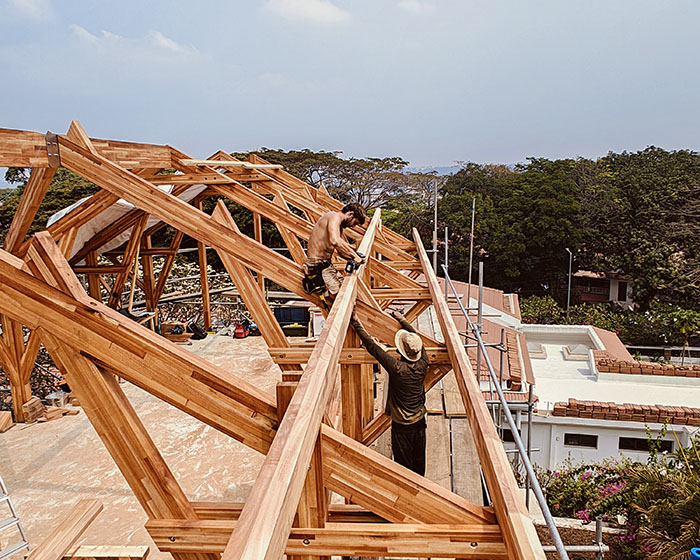
A contemporary timber residence integrating engineered wood systems with traditional Goan architectural elements. The project combines structural clarity with climatic responsiveness in a coastal environment.
GLULAM A-FRAME STRUCTURAL SYSTEM
EUROCODE-BASED STRUCTURAL METHODOLOGY
COASTAL DURABILITY DETAILING
PREFABRICATION COORDINATION
LOW-CARBON STRUCTURAL STRATEGY
Project Overview
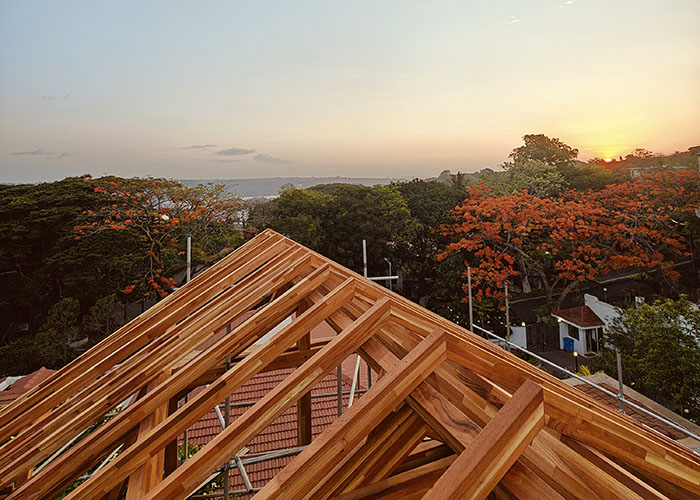
Altinho Residence explores the integration of engineered timber systems within a context shaped by coastal humidity, monsoon exposure and local construction practices.
The architectural intent required expressive structural forms while maintaining durability and long-term performance. Timber was selected not only for its aesthetic qualities but also for its structural efficiency and environmental advantages.
Scope of Work
TIMBER ENGINEERING CONSULTANCY (TEC)
STRUCTURAL DESIGN DEVELOPMENT
PREFABRICATION COORDINATION
ON-SITE EXECUTION
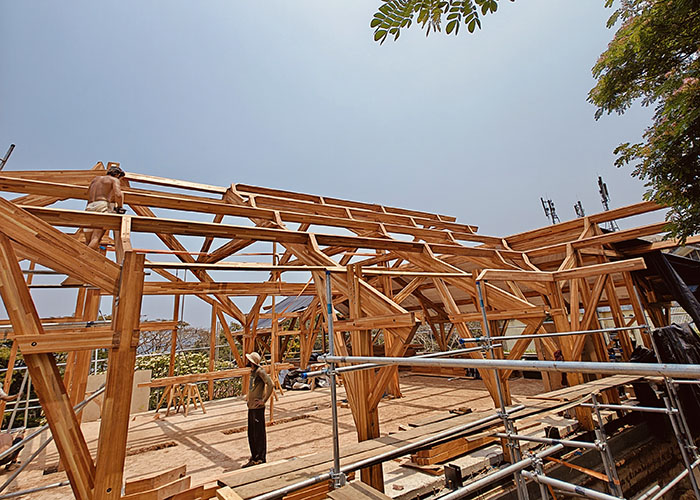
Lumber & Leaf provided structural analysis and detailing, coordinated prefabrication and supervised installation to ensure structural precision.
Structural Concept
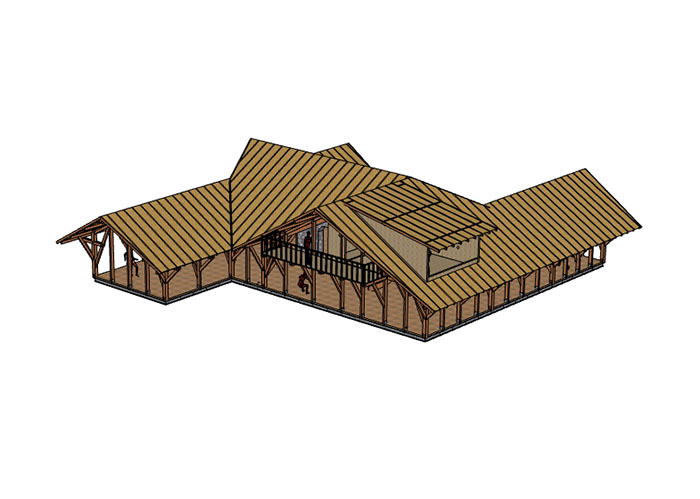
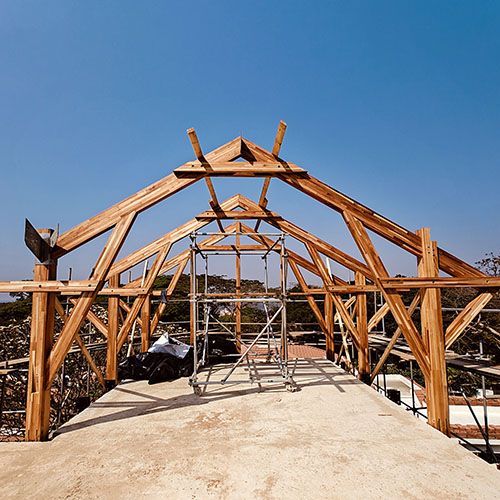
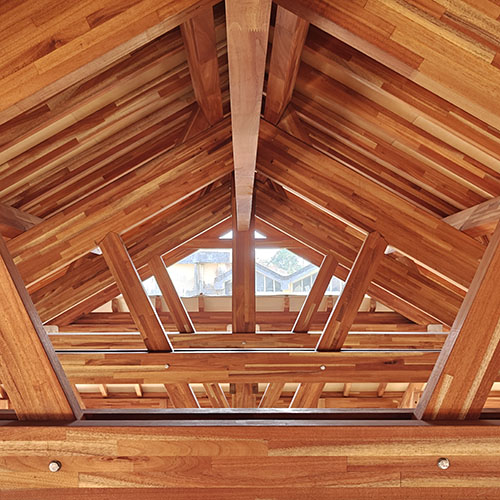
The structural system is centred around glulam A-frame assemblies designed to provide both architectural expression and structural efficiency.
Load paths were carefully developed using Eurocode-based methodologies and adapted to Indian construction conditions. The A-frame configuration allows effective distribution of vertical and lateral loads while maintaining open interior spaces.
The structure was engineered to optimise material use while ensuring long-term stability in a high-humidity coastal climate.
Materials & Systems
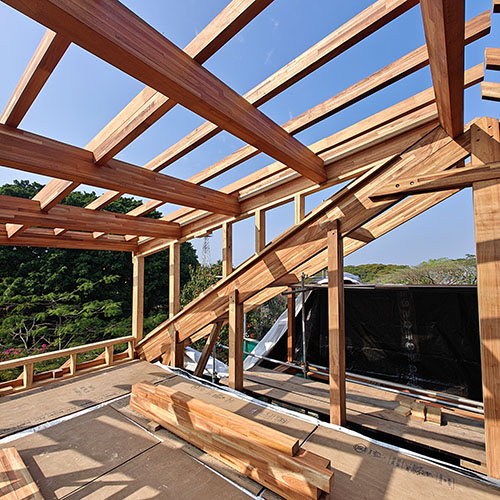
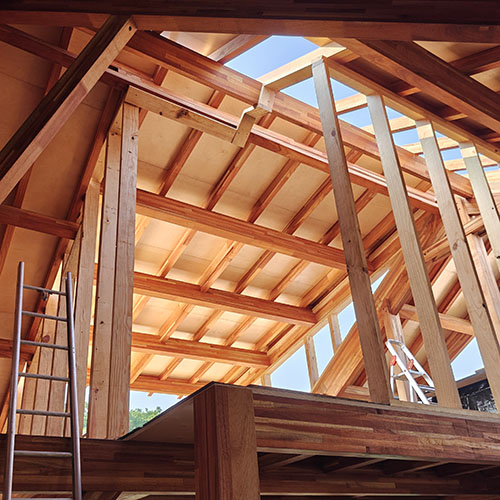
The project features glue-laminated timber (glulam) structural members combined with precision-fabricated connectors and protective detailing.
Special attention was given to:
- Moisture management
- Ventilation strategy
- Connection durability
- Protective finishes
Material selection prioritised durability, structural efficiency and reduced embodied carbon.
Sustainability & Performance
Timber was selected for its carbon storage capacity and reduced embodied carbon compared to conventional systems.
The lightweight structural system minimised foundation loads and reduced overall material consumption. Structural optimisation ensured efficient span performance while maintaining architectural intent.
Durability strategies were integrated to ensure long service life in a coastal climate.
Process & Execution
Close coordination between engineering, prefabrication and site installation was essential to the project’s success.
Structural components were precisely fabricated and delivered ready for assembly. Careful sequencing and site supervision ensured efficient installation and dimensional accuracy.
This integrated approach reduced on-site adjustments and improved overall construction efficiency.