
SUSTAINABILITY
Engineering and Design with Environmental Responsibility
Sustainability in construction is not a branding exercise. It requires informed decisions based on structural performance, lifecycle impact and long-term durability.
At Lumber & Leaf, sustainability is built into how we design, what we engineer, which materials we select and how we plan sites. It is practical, measurable and connected to real project outcomes.
What is Mass Timber?
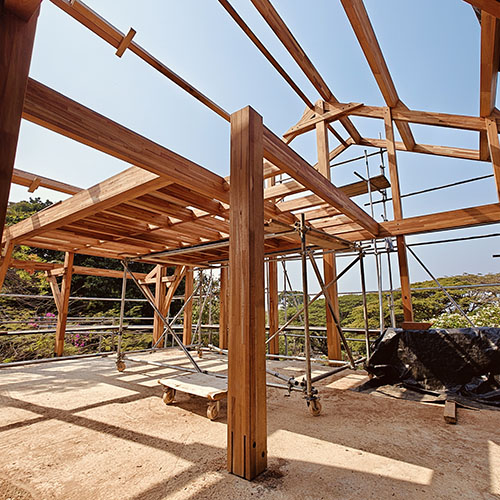
Mass timber refers to engineered wood products designed for structural use — cross-laminated timber (CLT), glue-laminated timber (glulam) and laminated veneer lumber (LVL). Unlike conventional timber framing, these systems are engineered for strength, dimensional stability and long spans.
Mass timber allows wood to compete structurally with concrete and steel across a wide range of building types. Components are prefabricated with precision, reducing material waste and improving construction efficiency.
Carbon Sequestration & Timber
Trees absorb carbon dioxide during growth and store it in their fibres. When that timber is used in construction, the carbon remains locked within the structure for the life of the building.
Timber construction also tends to produce lower emissions than concrete or steel alternatives. But carbon performance is not automatic — it depends on responsible forest management, efficient structural design and thoughtful lifecycle planning.
Sustainability must be evaluated honestly, not assumed.
Material Choice: General Principles
We select materials based on performance, not trends. Every material carries advantages and limitations. The right choice depends on the project — its structure, its climate, its budget and its lifespan.
We evaluate materials against structural efficiency, embodied carbon, durability in local conditions, maintenance requirements, availability and lifecycle performance.
Timber
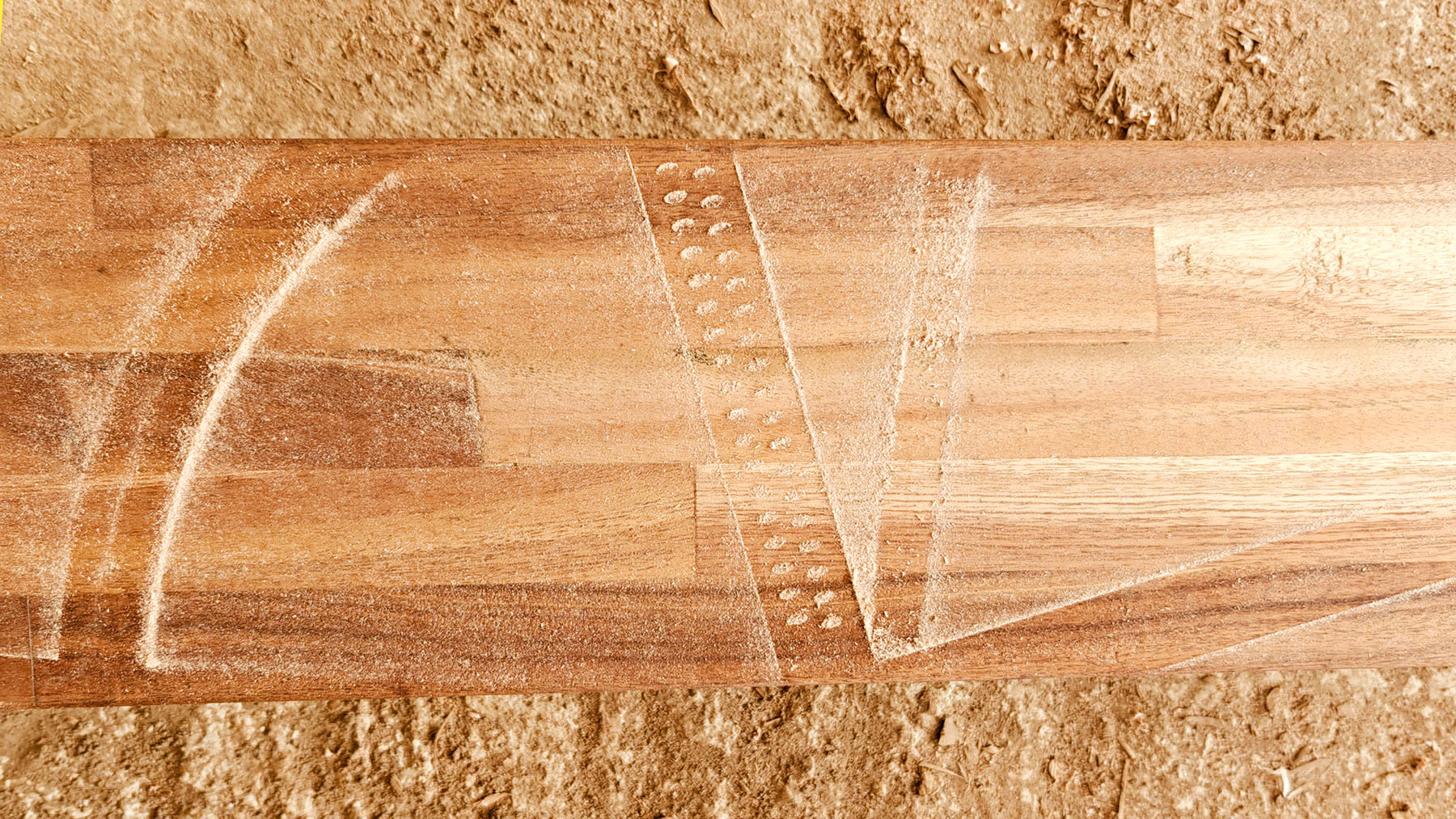
Renewable when responsibly sourced. Stores carbon. Lightweight, structurally efficient, well suited to prefabrication. Requires proper detailing for moisture and fire.
Concrete
High compressive strength and widely available. Suited to foundations and certain structural roles. High embodied carbon and heavy transport loads.
Steel
High tensile strength, precision fabrication, long spans. High embodied carbon, corrosion concerns in coastal environments, energy-intensive production.
Lifecycle Thinking & Measurable Performance
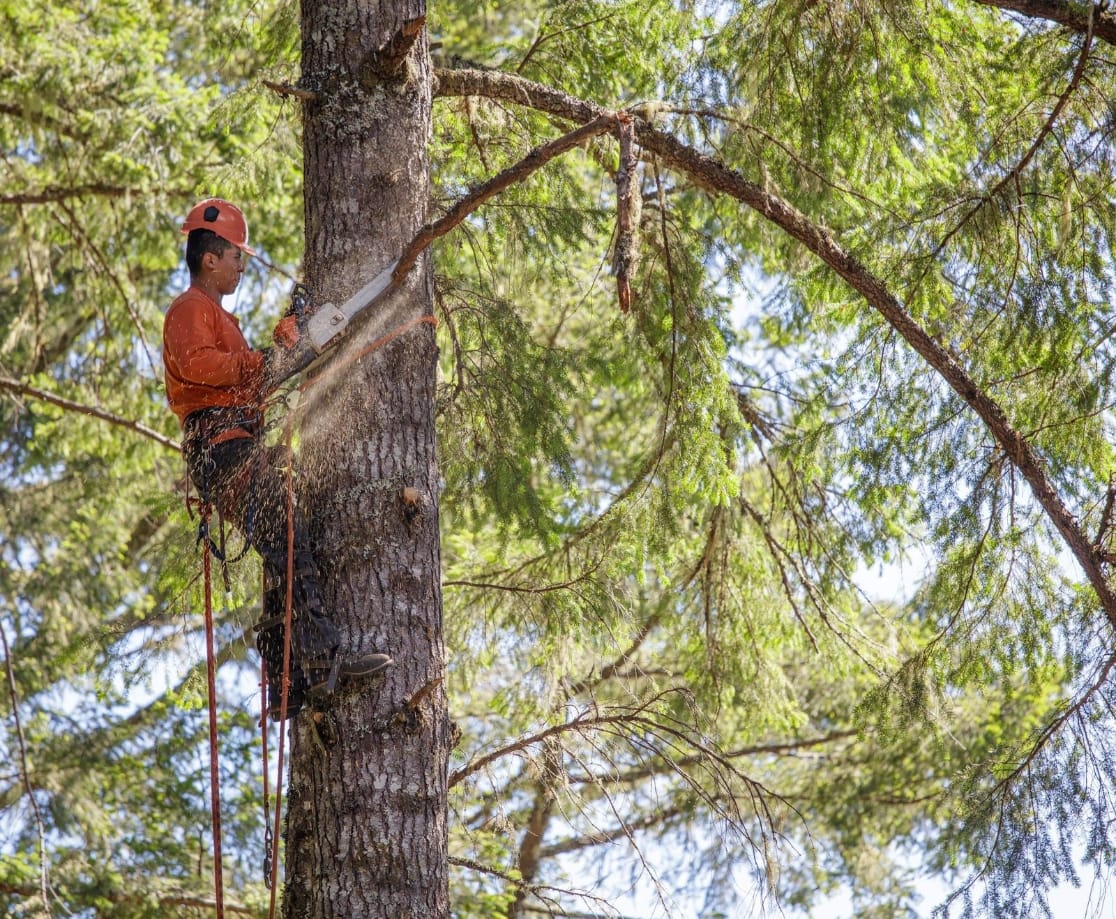
True sustainability extends beyond the moment of construction. Buildings should be evaluated across their entire lifecycle — from material extraction through to end-of-life. Early design decisions have the greatest influence, which is why we integrate carbon and material efficiency considerations from the feasibility stage.
We provide Life Cycle Assessment (LCA) services — embodied carbon calculations, comparative material analysis, carbon storage estimation and reporting aligned with sustainability frameworks — to support evidence-based decision-making rather than assumptions.
Structural optimisation is part of this: an efficient timber system uses less material while maintaining full integrity. Better spans, refined logic and precise detailing reduce embodied carbon without compromising safety.
Responsible Implementation
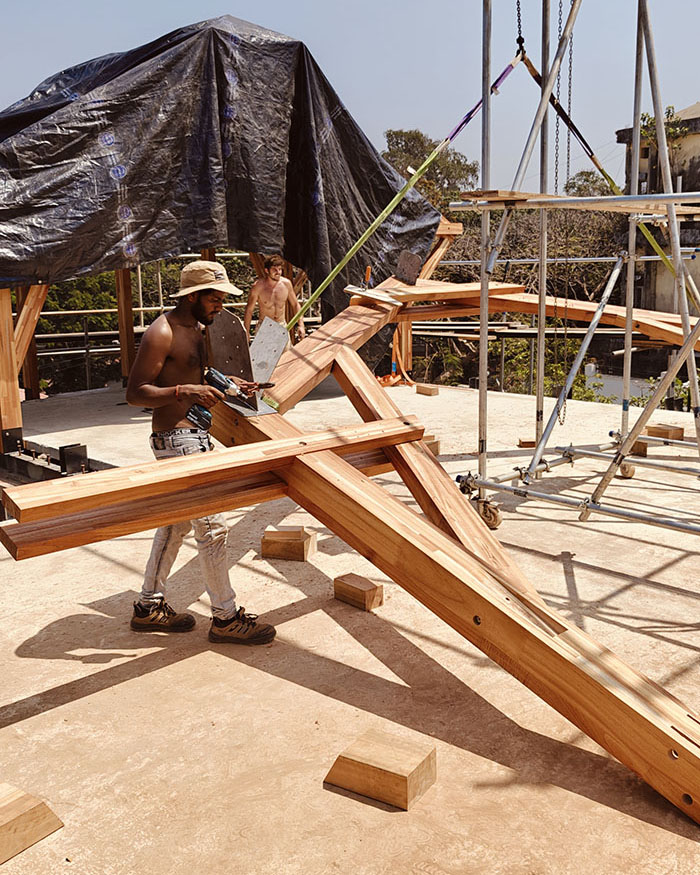
Sustainable construction is connected to responsible sourcing and ecological awareness. Through our site ecology services, we evaluate tree preservation, planting strategies and ecosystem integration alongside structural development.
In the Indian context, responsible implementation requires adaptation to climate, proper detailing and long-term maintenance planning. Our goal is not to promote timber unconditionally — but to implement it correctly, responsibly and with measurable value.